BS Textile Design Admission in Lahore: Eligibility Criteria, Fee Structure and Career Scope
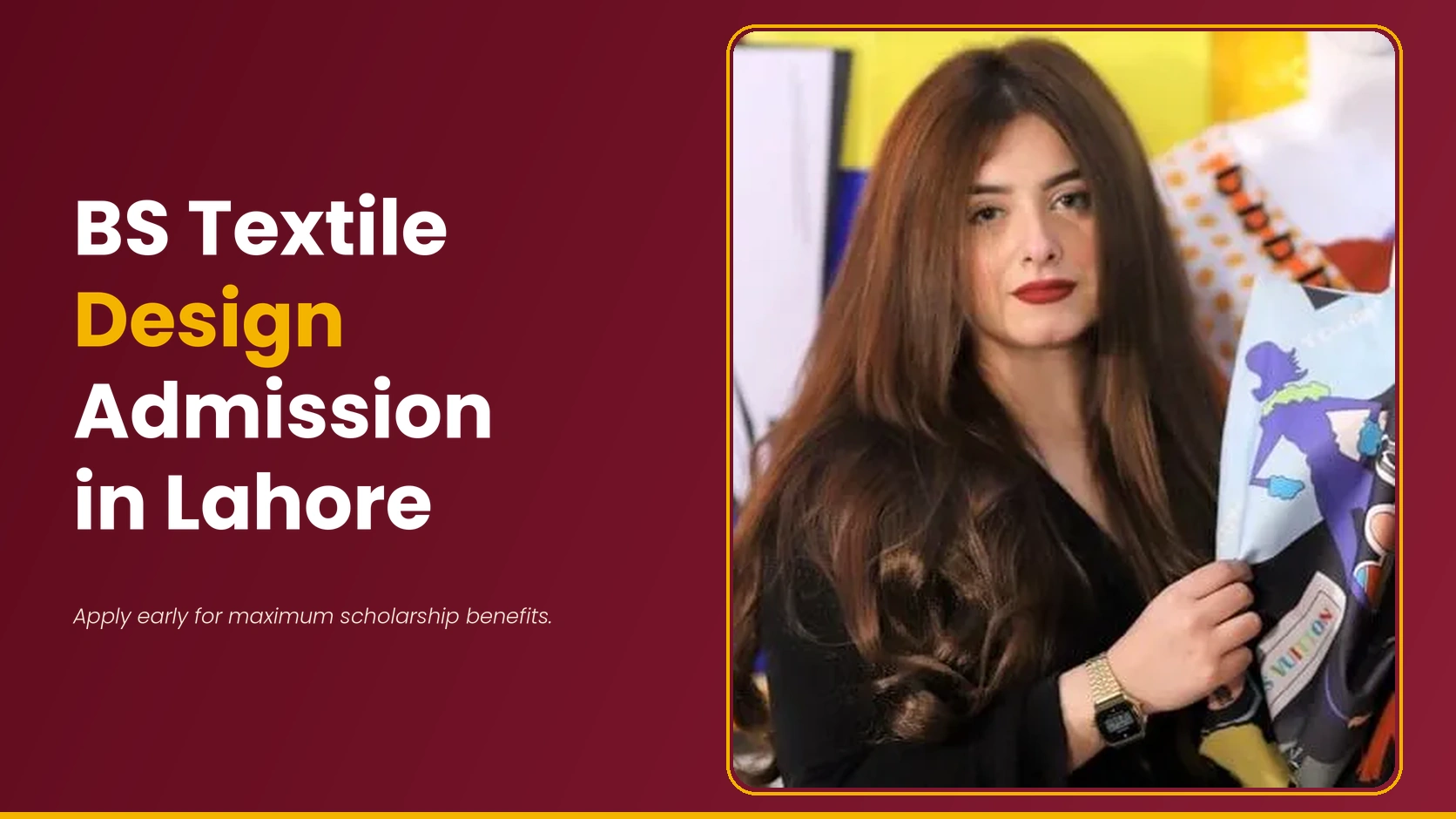
Choosing the right degree is an important decision for students who want to build a career in the textile and fashion industry. Pakistan has a well-established textile sector, creating opportunities for creative individuals who understand fabric development, surface patterns, colours and modern textile production techniques. A bachelor’s degree in this field can help students combine artistic abilities with practical and technical knowledge. Students interested in BS Textile Design Admission in Lahore should explore the programme structure, eligibility requirements, university facilities and future career opportunities before applying. Hajvery University offers this programme through its Faculty of Fashion and Textile Design. Students can explore the Faculty of Fashion and Textile Design at Hajvery University to learn more about the available academic options.

What Is BS Textile Design?
BS Textile Design is an undergraduate degree that focuses on the creative and technical development of textile materials. It teaches students how to develop fabric patterns, work with colours, understand different textile structures and create designs suitable for commercial and industrial applications.
The programme combines artistic concepts with practical learning. Students explore how traditional textile techniques can be developed through modern design approaches and digital technologies.
A textile designer may work with clothing manufacturers, home furnishing companies, textile mills, fashion brands and independent design studios. The degree can also provide a foundation for students interested in starting their own textile-related businesses.
Why Study BS Textile Design in Lahore?
Lahore is an important educational and creative centre in Pakistan. The city provides access to universities, fashion businesses, design studios and textile-related industries. Students can explore different creative fields while developing the technical knowledge required for professional work.
There are several reasons why students consider studying textile design in Lahore:
- Creative learning: Students develop artistic skills through drawing, colour selection, pattern creation and fabric design.
- Industry exposure: Opportunities to understand the requirements of textile manufacturers and fashion businesses.
- Practical experience: Studio-based activities help students turn creative ideas into actual design concepts.
- Professional development: Students learn presentation, communication, research and project management skills.
- Career flexibility: Graduates can explore employment, freelancing and entrepreneurship.
When comparing Textile Design Universities in Lahore, students should consider more than the university name. Programme duration, course content, faculty experience, studio facilities, practical projects and internship opportunities are important factors.

BS Textile Design Admission in Lahore at Hajvery University
Hajvery University offers BS Textile Design through its Faculty of Fashion and Textile Design. The programme is designed to introduce students to different aspects of textile development, from basic drawing and colour theory to advanced textile production and collection development.
The university’s published programme information identifies Lahore and Sheikhupura as available campuses. The degree follows a regular classroom-based learning format.
The programme includes 40–44 courses and approximately 130–136 credit hours over four years. Its structure allows students to develop their creative abilities while understanding the technical and commercial requirements of the textile sector.
The university also highlights practical learning, specialised internships and mentoring as important parts of its educational approach.
BS Textile Design Eligibility Criteria
Before applying, students should understand the academic requirements of their selected programme. Meeting the eligibility conditions is an essential step in the admission process.
According to the published programme information at Hajvery University, the basic entry requirements include:
- Intermediate qualification from a recognised educational board.
- A-Levels qualification.
- An equivalent qualification accepted by the university.
Students from different academic backgrounds can explore the programme, provided their qualifications meet the university’s admission requirements.
Documents Required for Admission
Applicants should prepare the following documents before starting their application:
- Matriculation certificate and result card.
- Intermediate certificate and result card or equivalent qualification.
- A-Levels documents, where applicable.
- CNIC or B-Form.
- Recent passport-size photographs.
- Any additional documents requested by the admissions office.
Students should confirm the latest document requirements and admission conditions with the university before submitting their applications.
BS Textile Design Programme Duration and Subjects
The degree at Hajvery University is structured as a four-year undergraduate programme consisting of eight semesters. The curriculum gradually introduces students to fundamental design concepts before moving towards specialised textile techniques and professional projects.
BS Textile Design Curriculum and Major Subjects
Some of the important subjects included in the published curriculum are:
| Semester | Major Subjects |
|---|---|
| Semester 1 | Basic Drawing, Shaping, Material and Models, History of Design |
| Semester 2 | Islamic Studies, Colour Theory, Still Life Drawing, Communication Skills |
| Semester 3 | Digital Communication, Surface Design, Motif Development, Block Printing |
| Semester 4 | Tie and Dye, Embellishment, Textile CAD, Rendering Techniques |
| Semester 5 | Fibres and Yarn, Colour Design Foundation, Screen Printing, Weaving |
| Semester 6 | Textile Marketing and Merchandise, Textile Accessories, Marketing and Management |
| Semester 7 | Mini Thesis, Product Execution, Textile Pricing and Costing |
| Semester 8 | Collection Development, Product Research, Dissertation Writing, Internship |
These subjects help students understand the complete design process, from developing an initial idea to preparing a finished textile collection.
For example, colour theory helps students understand how different colours work together, while textile CAD introduces digital methods of developing textile patterns. Weaving, printing and surface design provide practical knowledge of fabric production and decoration.
BS Textile Design Fee Structure at Hajvery University
Fee is an important consideration when selecting a university. Students should understand the tuition charges, studio expenses and initial admission payment before making their decision.
BS Textile Design Fee Structure at Hajvery University
According to Hajvery University’s published fee structure,
the BS (Hons.) Textile Design programme has the following listed charges:
| Fee Description | Amount |
|---|---|
| Enrollment Fee per Semester | Rs. 6,000 |
| Per Course Fee | Rs. 20,000 |
| Per Course Studio Charges | Rs. 10,000 |
| Courses at the Time of Admission | 4 |
| Published Admission-Time Fee | Rs. 96,000 |
Important fee clarification: The university’s published fee page lists Rs. 96,000 as the amount payable at admission for four courses. However, the listed per-course tuition and studio charges do not mathematically reconcile with that total. Students should confirm the complete payable amount and any applicable additional charges directly with the admissions office before making payment.
For the latest programme charges and payment details, visit the official Fee Structure page: https://hup.edu.pk/fee-structure/
Students should also ask about available merit-based scholarships and need-based financial assistance to understand their financial options.
BS Textile Design Scope in Pakistan
The textile sector is an important part of Pakistan’s economy. It includes fabric manufacturing, clothing production, home textiles, printing, embroidery and textile exports.
As consumer preferences and international fashion trends continue to evolve, businesses require professionals who can develop appealing designs while understanding fabric quality, production processes and market requirements.
This creates different possibilities for graduates with a Textile Design Degree in Pakistan.
The BS Textile Design Scope in Pakistan is not limited to traditional fabric designing. Graduates can explore opportunities in manufacturing, fashion businesses, digital design, product development and independent creative work.
Students who develop strong technical skills, maintain a professional portfolio and gain practical experience can improve their employment prospects.
Textile Design Career Opportunities
After completing the degree, graduates can consider different professional roles depending on their interests, abilities and experience.
Some potential Textile Design Career Opportunities include:
1. Textile Designer
Textile designers develop patterns, prints and fabric designs for clothing, accessories and home furnishing products. They work with colours, textures and different design techniques to create commercially suitable products.
2. Surface Pattern Designer
These professionals create decorative patterns for fabrics and other materials. Their work may include repeated motifs, printed designs and customised surface decorations.
3. Textile CAD Designer
A textile CAD designer uses computer-based design applications to develop digital patterns, repeat layouts and textile illustrations. Technical software knowledge is particularly valuable in this role.
4. Textile Merchandiser
Textile merchandisers coordinate between customers, manufacturers and production teams. They help manage product requirements, orders, timelines and communication throughout the manufacturing process.
5. Product Development Executive
These professionals contribute to developing new textile products. Their responsibilities may include researching market trends, selecting materials and coordinating product samples.
6. Textile Production Assistant
Production assistants support manufacturing activities by helping with production planning, process coordination and quality-related tasks.
7. Freelance Textile Designer
Graduates can also work independently by creating customised textile patterns, digital prints and design collections for clients and businesses.
Career progression depends on practical experience, technical knowledge, portfolio quality and professional performance.
Textile Designing Courses in Lahore: What Will You Learn?
Students researching Textile Designing Courses in Lahore should compare the subjects and practical components offered by different institutions.
A good textile design education should cover both creative and technical areas.
Important learning areas include:
- Drawing and illustration: Developing the ability to communicate design ideas visually.
- Colour theory: Understanding colour combinations, contrast and visual balance.
- Surface design: Creating decorative effects and patterns on textile materials.
- Block printing: Learning traditional printing methods and pattern applications.
- Textile CAD: Using digital tools to develop textile designs.
- Weaving: Understanding fabric construction and different weaving techniques.
- Fibres and yarn: Learning about textile materials and their characteristics.
- Textile marketing: Understanding product positioning, merchandising and market needs.
These subjects provide a combination of artistic and practical knowledge that can be useful in professional textile environments.
How to Choose Among Textile Designing Universities in Pakistan
Students comparing Textile Designing Universities in Pakistan should evaluate several factors before selecting an institution.
First, check whether the university offers a complete four-year bachelor’s degree or a shorter associate degree. These qualifications have different durations and academic structures.
Second, review the curriculum carefully. A programme that combines traditional textile techniques, digital design and practical projects can provide a broader learning experience.
Third, consider the availability of experienced faculty, studio-based learning, internships and industry interaction.
Hajvery University provides several options through its Faculty of Fashion and Textile Design, including ADP Textile Design, ADP Fashion Design, BS Fashion Design and BS Textile Design.
Students can compare these programmes according to their educational goals and preferred career direction.
How to Apply for Admission at Hajvery University
Students interested in applying can follow the university’s admission process.
- Visit the official Hajvery University website.
- Explore the Fashion and Textile Design faculty.
- Review the programme requirements and fee details.
- Complete the online admission application.
- Submit the required academic and personal documents.
- Follow the admissions office instructions regarding eligibility verification and the next steps.
Hajvery University offers admissions in Fall and Spring semesters, subject to the current admission schedule and programme availability.
Applicants should check the official admissions portal for updated deadlines and application information.
Conclusion
Choosing the right undergraduate programme can help students turn their creative interests into professional skills. Textile design combines artistic expression, technical understanding and knowledge of the manufacturing industry, making it an interesting academic option for students who enjoy creativity and innovation. Those considering BS Textile Design Admission in Lahore should carefully review the eligibility requirements, programme structure, fee details and career opportunities before applying. Hajvery University provides a four-year BS Textile Design programme with a curriculum covering drawing, surface design, textile CAD, weaving, marketing and practical projects. Students interested in developing their future in this field can explore Hajvery University to learn more about its academic programmes, admission opportunities and student support.
Frequently Asked Questions
1. What is the eligibility criteria for BS Textile Design at Hajvery University?
According to the university’s published programme information, applicants should have Intermediate, A-Levels or an equivalent qualification. Students should confirm the latest admission requirements with the admissions office.
2. What is the duration of BS Textile Design?
The programme at Hajvery University takes four years to complete and consists of eight semesters, covering approximately 130–136 credit hours.
3. What is the BS Textile Design fee structure at Hajvery University?
The published fee structure lists an enrollment fee of Rs. 6,000 per semester, a per-course fee of Rs. 20,000 and studio charges of Rs. 10,000 per course. The listed admission-time amount is Rs. 96,000 for four courses. Applicants should confirm the final payable amount through the official university fee structure.
4. What is the scope of BS Textile Design in Pakistan?
Graduates can explore careers in textile designing, surface pattern development, textile merchandising, digital textile design, product development and production coordination. They can also consider freelancing or starting their own design businesses.
5. Does Hajvery University offer BS Textile Design in Lahore?
Yes. Hajvery University lists BS Textile Design at its Lahore campus. The programme information also identifies Sheikhupura as an available campus. Students should contact the university to confirm current seat availability and admission dates.